NDAs for startups: when to sign them, common mistakes and essential clauses
In the early stages of a startup, sharing information is unavoidable: with co-founders, developers, investors, suppliers or potential partners. Problems arise when strategic information is shared without adequate legal protection. At that point, an NDA (Non-Disclosure Agreement) becomes a core element of the project’s legal security.
Within the Spanish startup ecosystem, an NDA is not just a formality. It is a preventive legal tool designed to structure relationships, set clear boundaries and protect the real value of the business, which often lies in intangible assets such as ideas, processes, data or technology.
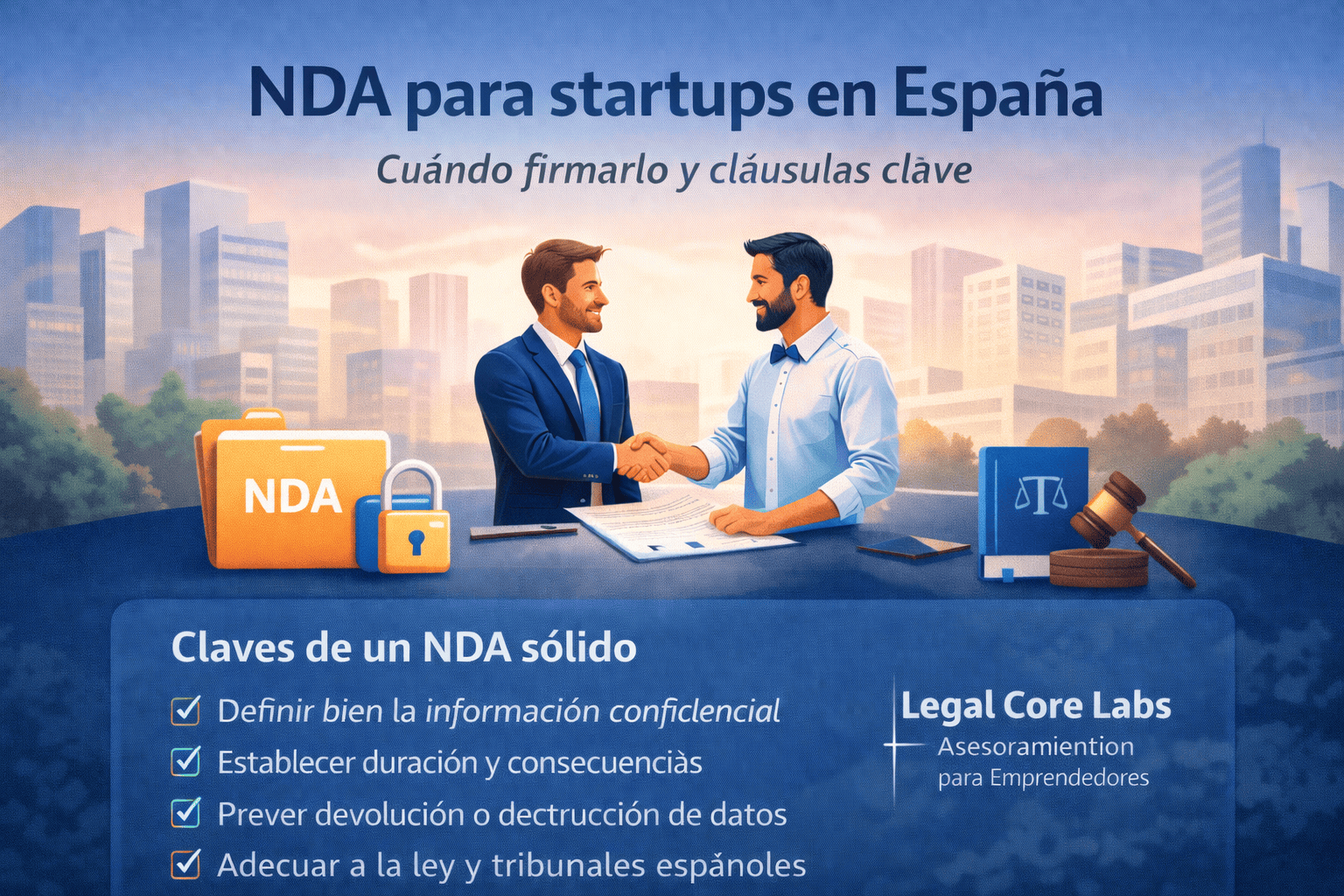
What is an NDA and why is it critical for startups?
An NDA is a contract by which one or more parties agree not to disclose or misuse confidential information accessed during a professional or commercial relationship.
In Spain, confidentiality obligations are supported by several legal frameworks, including:
- The Civil Code, which recognises contractual freedom and binding force.
- The Workers’ Statute, which imposes duties of good faith and confidentiality.
- Act 1/2019 on Trade Secrets, which requires reasonable protection measures for information to be legally enforceable.
For startups, this is essential: without contractual confidentiality measures, enforcing rights against misuse of information becomes significantly more difficult.
When should a startup sign an NDA?
The general rule is simple: before sharing sensitive information. Common scenarios include:
- Employees, contractors and freelancers, especially when they access source code, customer data or internal processes.
- Co-founders and early-stage partners, even before incorporation.
- Technology providers, agencies and consultants, particularly in development or marketing.
- Strategic partners and commercial alliances, during preliminary negotiations.
- Investors and due diligence processes, once detailed information is disclosed.
- Pilot customers or beta testers, when products are not yet public.
The earlier the NDA is signed, the lower the risk exposure.
Common NDA mistakes in startups
Typical issues arise from improper use rather than lack of NDAs:
- Sharing information without a signed NDA.
- Using generic templates without adapting them to Spanish law.
- Defining confidential information too vaguely.
- Setting unjustified unlimited confidentiality periods.
- Failing to regulate intellectual property issues.
- Not addressing what happens to information after the relationship ends.
A poorly drafted NDA may provide false security.
The 10 essential clauses of a solid NDA
- Clear identification of the parties, including legal entities and representatives.
- Precise definition of confidential information, with clear categories.
- Specific purpose for information disclosure, limiting its use.
- Confidentiality obligations and reasonable protection measures.
- Confidentiality exceptions, such as public or legally required disclosures.
- Duration of confidentiality obligations, aligned with the nature of the information.
- Return or destruction of information upon termination.
- Consequences of breach, including liability for damages.
- Applicable law and jurisdiction, typically Spanish law.
- Final clauses, such as non-assignment and written amendments.
NDA as a preventive legal tool
An NDA does not eliminate all disputes, but it significantly strengthens a startup’s legal position. It helps demonstrate that information was protected, supports trade secret claims and conveys professionalism in negotiations.
How Legal Core Labs can help
At Legal Core Labs, we assist startups in drafting and reviewing NDAs tailored to their real growth stage, balancing flexibility with effective protection.
We cover NDAs for employees, contractors, co-founders, investors, suppliers and partners, as well as reviewing third-party agreements as part of a broader legal strategy.
Because protecting your information is not about signing any NDA, but about signing the right one at the right time.