Accountant or Lawyer? What No One Tells You When Starting Your Startup
Discover why a consultancy isn't a substitute for a lawyer in the startup world. Learn what each one does and how to avoid serious legal mistakes.
Read more →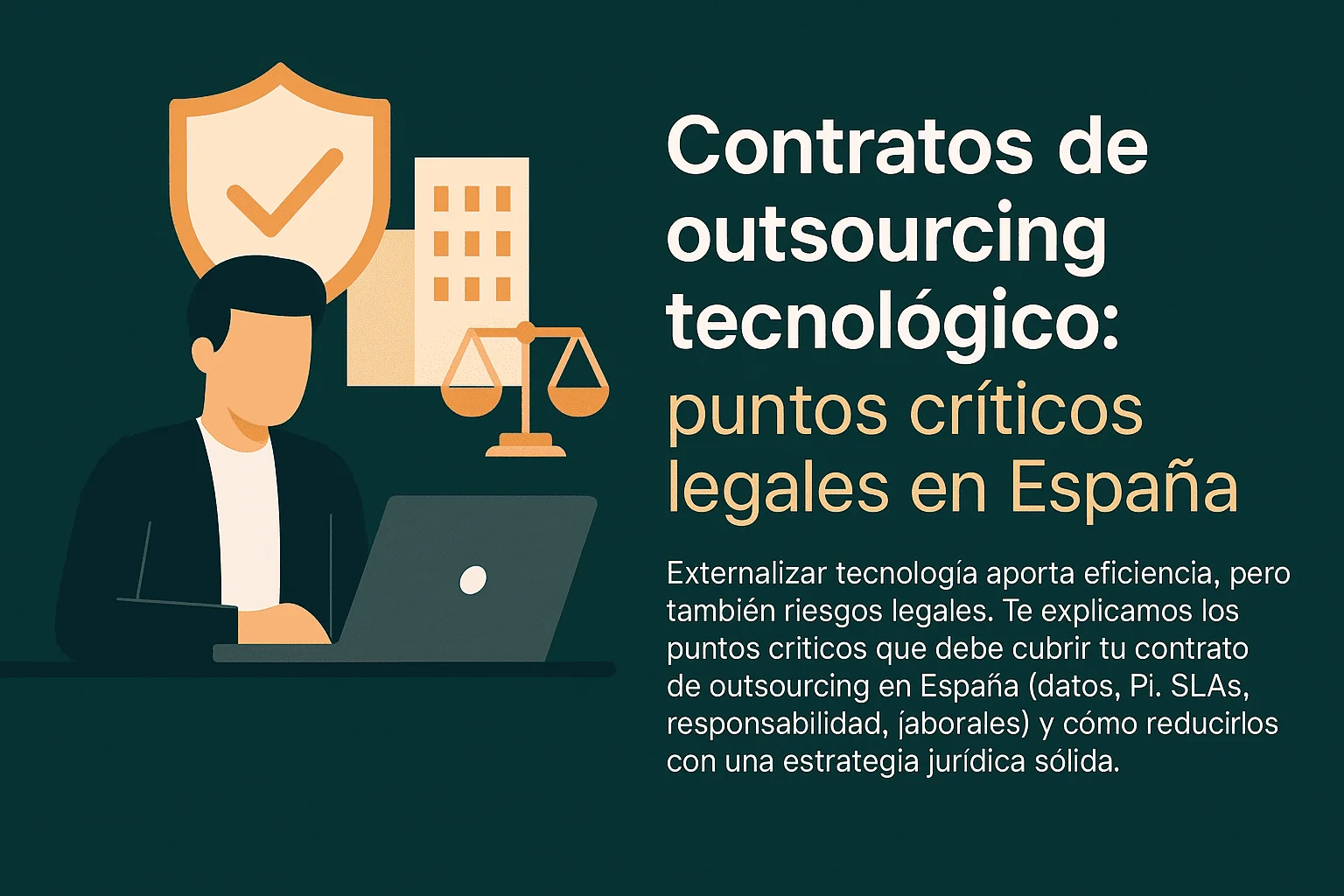
Technology outsourcing allows businesses to scale, control costs, and accelerate projects.
But delegating development, support, or infrastructure involves legal risks that must be anticipated in the contract.
Below are the critical points to cover — focused on Spain — and why they make all the difference.
📌 A precise service definition prevents disputes and makes compliance measurable.
These clauses protect strategic assets (clients, code, know-how).
If the provider processes data on behalf of the client, the client is the controller and the provider is the processor.
A data processing agreement (Art. 28 GDPR) must be signed, including at least:
Additionally, agree on:
💡 Practical tip: validate the provider’s assurances (codes of conduct or certifications) and data location (EEA or transfers with adequate safeguards).
Paying for a development does not automatically make you the owner of the software’s exploitation rights.
In Spain, ownership belongs to the author unless there is an express written assignment.
Include a broad assignment clause (exclusive or non-exclusive, as appropriate), covering:
Define measurable SLAs: availability, response and resolution times, backups, RPO/RTO, maintenance windows, and escalation paths.
Link service credits or penalties to non-compliance (and termination rights for repeated breaches).
Include warranty periods for defect correction and a technical review schedule.
Such planning minimizes disruptions and dependency on the provider.
Require prior written authorization to subcontract any part of the service.
Ensure subcontractors’ obligations align with those of the main provider (including data protection under Art. 28.2 GDPR).
As the client company, you must verify that the contractor is up to date with Social Security obligations (certificate from TGSS).
Otherwise, you could be jointly liable for debts incurred during the engagement (enforceable up to 3 years after termination) and certain wages.
This liability does not cover debts prior to the contract.
Useful clauses:
Specify applicable law (Spain) and jurisdiction or arbitration forum.
Include an escalation process (negotiation / mediation) to resolve issues before litigation.
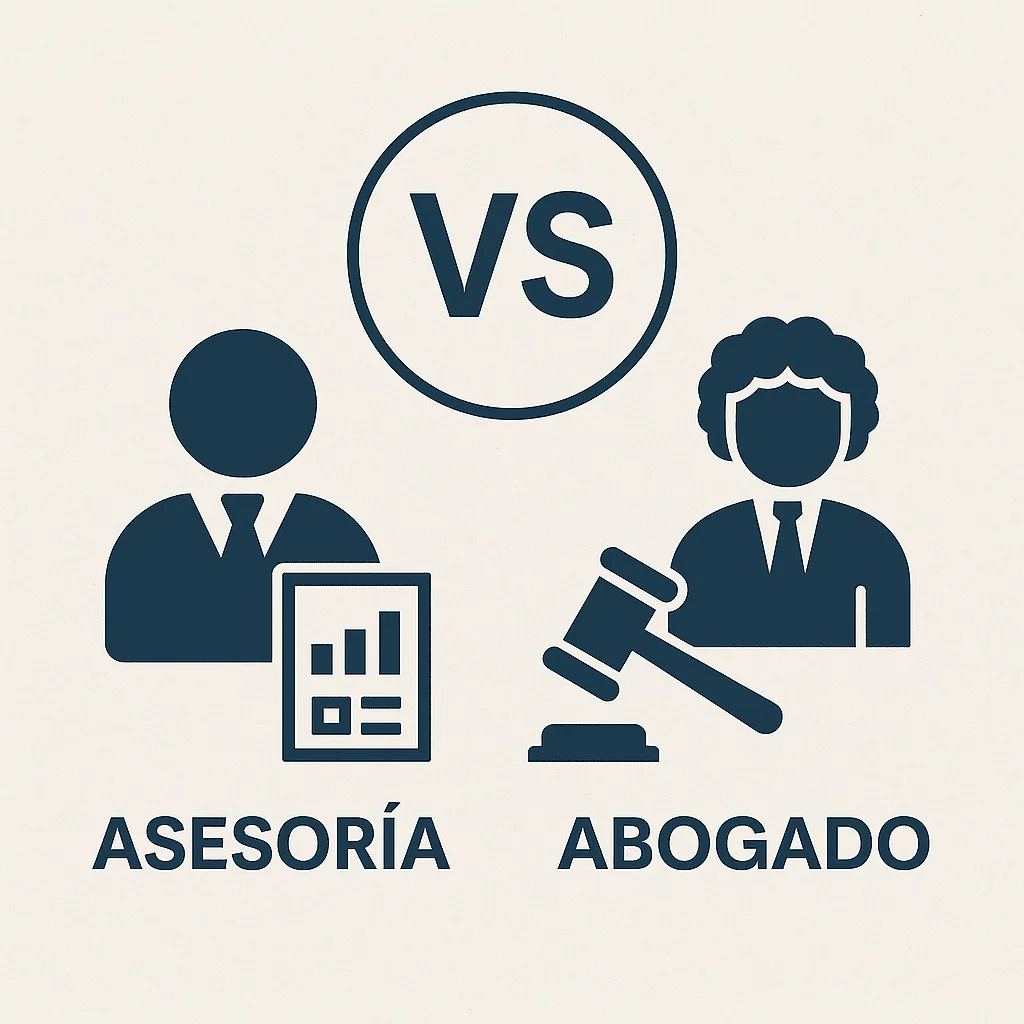
Discover why a consultancy isn't a substitute for a lawyer in the startup world. Learn what each one does and how to avoid serious legal mistakes.
Read more →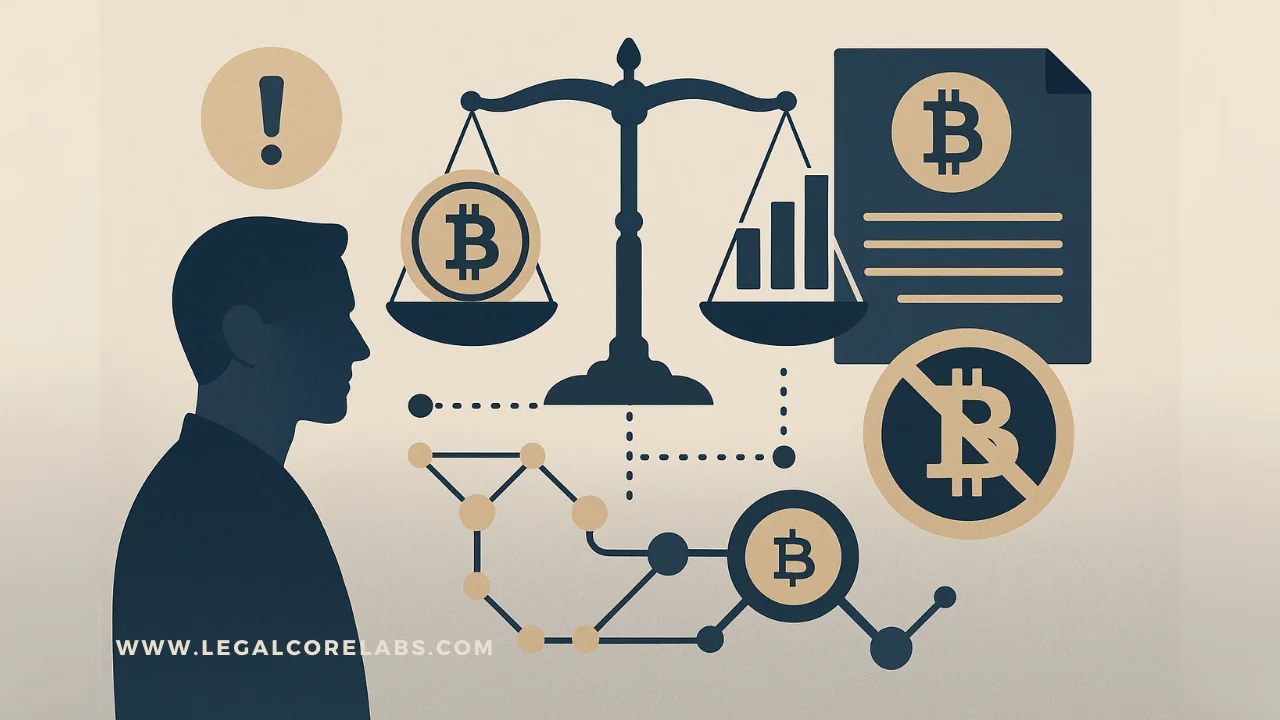
What is insider trading in cryptocurrencies and how is market abuse combated in Spain? Discover how MICA regulates it and what obligations it imposes on platforms and issuers.
Read more →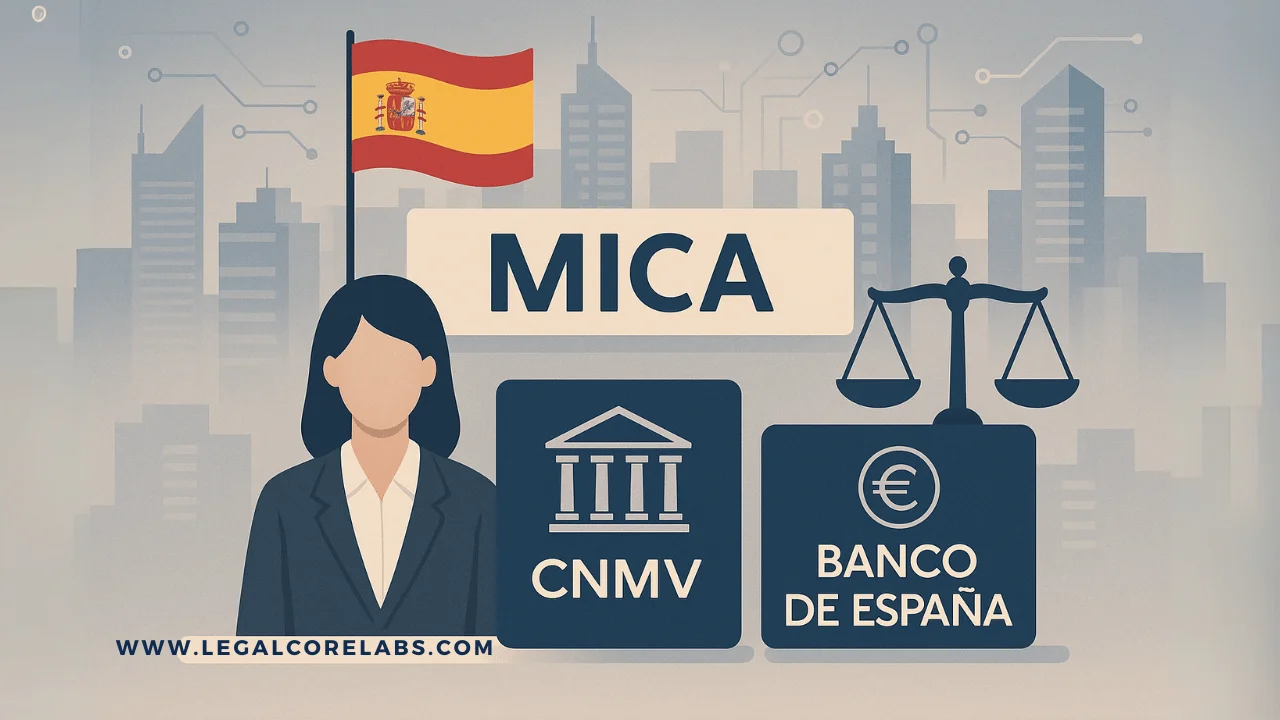
Who supervises MICA in Spain? Discover the functions of the CNMV, the Bank of Spain, and the sanctioning powers under the MICA Regulation for cryptocurrency providers.
Read more →