Advantages of Selling Company Shares Through a Holding Company vs. as an Individual
The sale of company shares can generate a significant capital gain, and how the transaction is structured has a major tax impact.
In Spain, there are substantial differences between selling as an individual and selling through a holding company.
1. Sale as an Individual
When an individual sells company shares, the resulting gain is taxed under the Personal Income Tax (IRPF) as part of the savings base:
- 19% on gains up to €6,000.
- 21% on gains between €6,000 and €50,000.
- 23% on gains between €50,000 and €200,000.
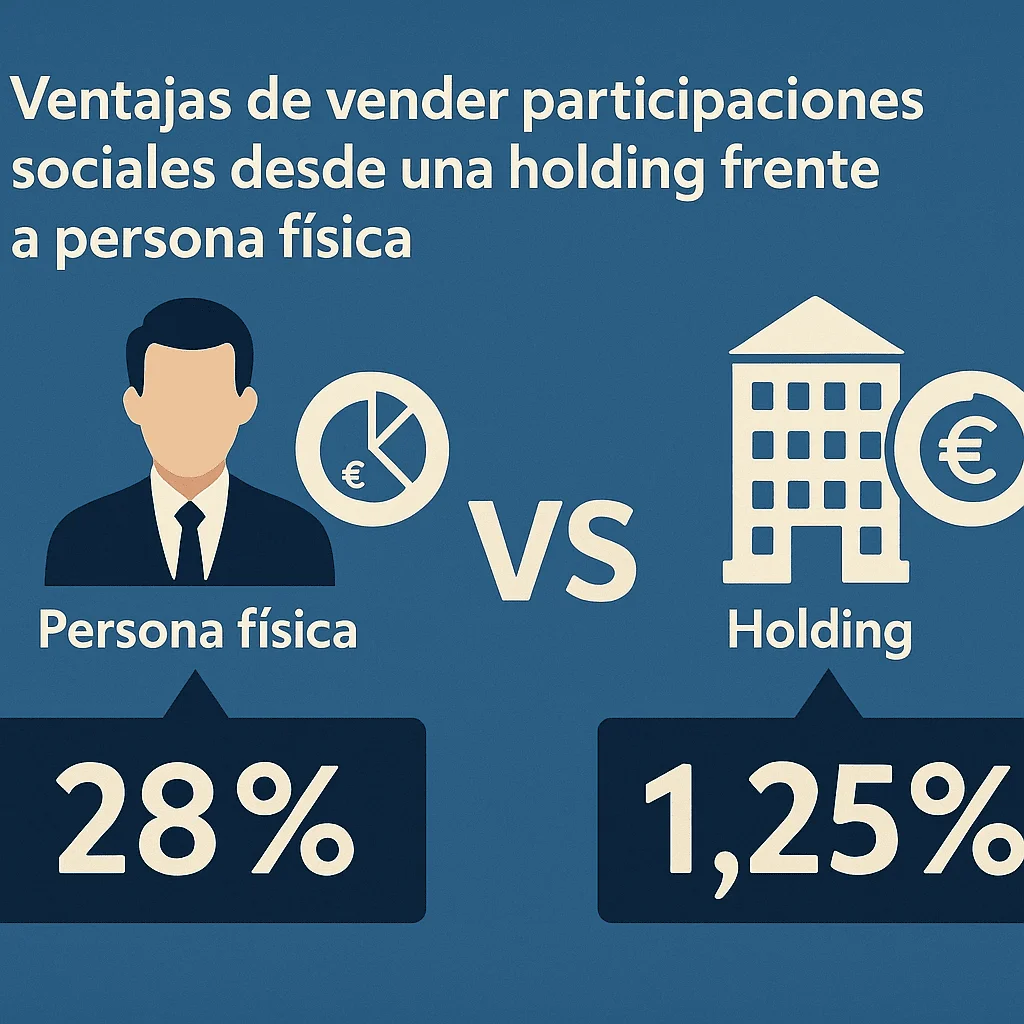
- 28% on gains exceeding €200,000.
👉 This means that, for large transactions, up to 28% of the gain may go directly to the Tax Agency.
2. Sale Through a Holding Company
If the sale is made through a holding company that meets the requirements of Article 21 of the Spanish Corporate Income Tax Law (LIS) — i.e., holding at least 5% ownership (or an investment exceeding €20 million) for at least one year:
- The capital gain is 95% tax-exempt.
- Only 5% of the gain is taxed at 25% under the Corporate Income Tax.
- The effective tax burden is just 1.25% on the total gain.
👉 This allows you to reinvest nearly the entire profit into new projects or assets without immediate tax erosion.
3. Practical Example
Let’s imagine an entrepreneur sells their stake in a company for €5,000,000, with an acquisition cost of €1,000,000.
The total gain is €4,000,000.
If sold as an individual:
- The gain is taxed under IRPF between 19% and 28%.
- Approximate tax: €1,000,000.
- The entrepreneur keeps €3,000,000 net.
If sold through a holding company:
- 95% of the gain is exempt.
- Only 5% (€200,000) is taxed at 25%, resulting in €50,000 in taxes.
- The company retains €3,950,000 net for reinvestment.
📊 Tax Comparison:
| Scenario |
Tax Paid |
Effective Rate |
Net Result |
| Sale as an individual |
€1,000,000 |
≈ 25% |
€3,000,000 |
| Sale through holding |
€50,000 |
≈ 1.25% |
€3,950,000 |
💡 Tax savings: €950,000.
4. Conclusion
Selling company shares through a holding company offers a tremendous tax advantage compared to selling as an individual:
- The difference can exceed 20% of the total transaction value.
- It enables you to reinvest nearly all the proceeds into new ventures or assets.
- It also provides benefits in wealth planning, succession, and asset protection.
💼 For all these reasons, structuring the ownership of company shares through a holding company is one of the most effective strategies for entrepreneurs seeking to maximize the net return from a future exit or divestment.